The Heart Rate Range That Actually Makes a Rest Day Count as Active Recovery
Quick Answer: Active recovery is generally meant to stay around 50 to 60 percent of maximum heart rate — noticeably easier than a regular training session — since going harder than that starts adding real training stress rather than promoting the blood flow and gentle movement recovery is meant to provide.
An active recovery session that leaves you breathing hard has quietly turned into another workout, not a rest day in disguise.

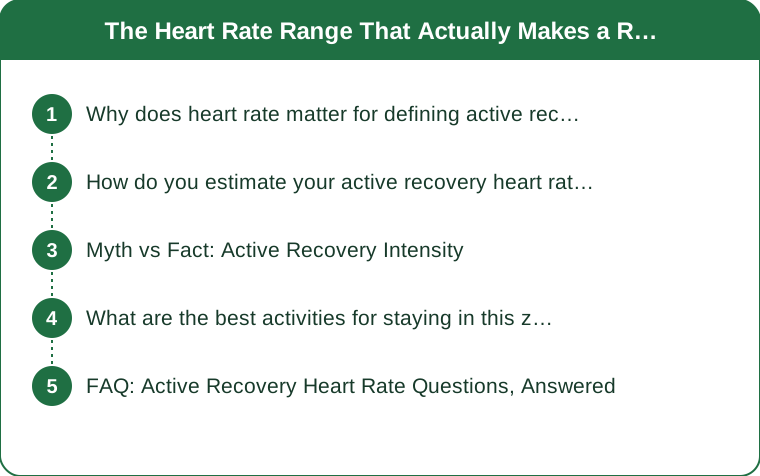
Why does heart rate matter for defining active recovery?
Heart rate is a simple, reliable proxy for effort, and active recovery specifically depends on staying in a low-effort zone that promotes blood flow without adding meaningful fatigue.
Going above roughly 60 percent of max heart rate shifts the body into a zone that starts building fitness rather than aiding recovery, which defeats the purpose of the rest day.
How do you estimate your active recovery heart rate zone?
A rough estimate of maximum heart rate is 220 minus age, with active recovery landing around 50 to 60 percent of that number — for a 35-year-old, that’s roughly 93 to 111 beats per minute.
This is genuinely easy — conversational pace, nose-breathing comfortable — not the moderately brisk pace many people default to on a “light” day.

Myth vs Fact: Active Recovery Intensity
Myth: any low-key movement counts as active recovery, regardless of pace. Fact: pace matters — a brisk walk or moderate bike ride can easily creep into training-stress territory without a heart rate check.
Myth: active recovery should still feel like some kind of workout to be worthwhile. Fact: the point is deliberately easy effort — feeling like you barely did anything is often a sign it worked as intended.
What are the best activities for staying in this zone?
A relaxed walk, easy stationary cycling, gentle swimming, or light yoga are all activities that naturally stay in the active recovery range for most people.
Activities with a competitive or pace-driven element, like a running club or group cycling class, are harder to keep in this low zone even with good intentions.
FAQ: Active Recovery Heart Rate Questions, Answered
Do I need a heart rate monitor for active recovery to count?
Not strictly — a simple talk test (able to hold a full conversation comfortably) is a reasonable substitute if you don’t have a monitor.
How long should an active recovery session last?
Roughly 20 to 40 minutes is typical; the low intensity means duration matters less than staying in the right effort zone.
Can active recovery replace a full rest day entirely?
For most people, alternating between active recovery and complete rest days across a week works well rather than using one exclusively.
TL;DR:
- Active recovery generally targets 50-60 percent of max heart rate
- Going harder than that shifts a rest day into actual training stress
- A talk test is a reasonable substitute for a heart rate monitor
- Walking, easy cycling, and gentle swimming are reliable active recovery choices
If an “easy” recovery session leaves you winded, it’s not the recovery day it was meant to be.
Keep Reading
This article is for general informational purposes only and is not medical advice. Always consult a qualified health professional for guidance specific to you.