Why Feeling Fine Isn't Actually Proof That You Don't Need a Rest Day
Feeling generally fine gets used as the default justification for skipping a planned rest day, but subjective feeling and actual recovery status are measured by the body on two different timelines, and they don’t always agree.

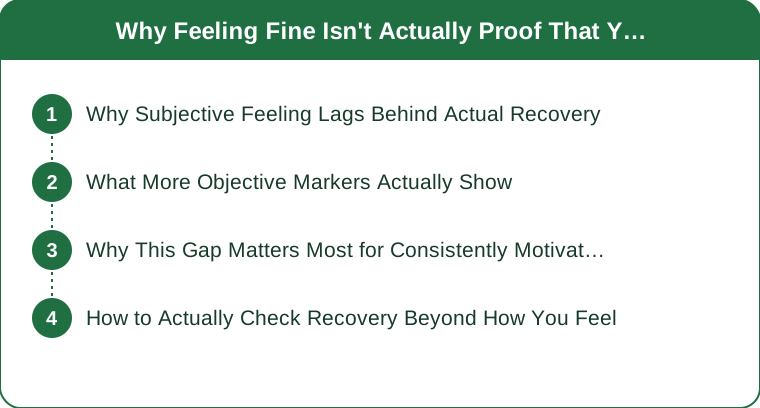
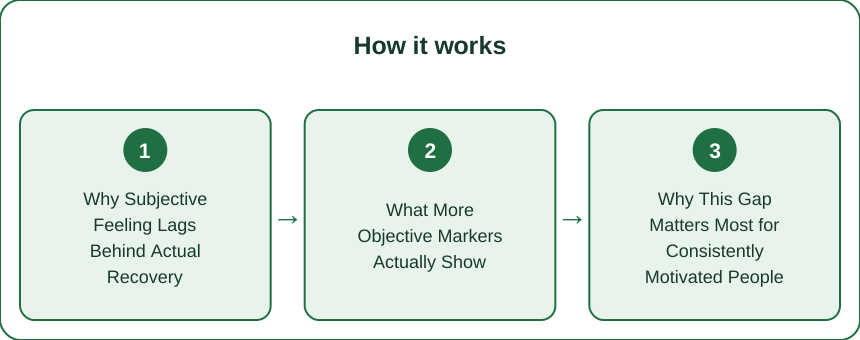
Why Subjective Feeling Lags Behind Actual Recovery
The disconnect: perceived energy and mood being influenced by factors like sleep the previous single night, caffeine, and motivation, all of which can mask an accumulated fatigue debt that’s been building steadily over the past week or two of training.
What More Objective Markers Actually Show
The better indicators: resting heart rate running a few beats higher than the personal baseline average, and heart rate variability trending downward over several consecutive mornings, both frequently signaling incomplete recovery well before subjective energy or mood drops noticeably.

Why This Gap Matters Most for Consistently Motivated People
The at-risk group: people who genuinely enjoy training and stay motivated being specifically the ones most likely to override an actual recovery need using how fine they subjectively feel, since motivation itself doesn’t reliably track underlying physiological recovery status.
How to Actually Check Recovery Beyond How You Feel
The practical check: tracking resting heart rate or heart rate variability with even a basic wearable or manual pulse check, and treating rest days as based on that data and the training plan rather than purely on subjective daily feeling, and the frame (feeling fine reflects sleep, caffeine, and mood, not necessarily actual recovery status — resting heart rate and heart rate variability trends catch the fatigue debt that subjective feeling alone tends to miss.)
Feeling generally fine gets used as the default justification for skipping a planned rest day, but perceived energy and mood are influenced by factors like sleep the previous single night, caffeine, and motivation, all of which can mask an accumulated fatigue debt that’s been building steadily over the past week or two of training. Resting heart rate running a few beats higher than a personal baseline average, and heart rate variability trending downward over several consecutive mornings, frequently signal incomplete recovery well before subjective energy or mood drops noticeably, and people who genuinely enjoy training and stay motivated are specifically the ones most likely to override an actual recovery need using how fine they subjectively feel, since motivation itself doesn’t reliably track physiological recovery status. Tracking resting heart rate or heart rate variability with even a basic wearable or manual pulse check, and basing rest days on that data alongside the training plan rather than purely on subjective daily feeling, catches the fatigue debt that feeling fine alone tends to miss.
Keep Reading
This article is for general informational purposes only and is not medical advice. Always consult a qualified health professional for guidance specific to you.