How Many Rest Days Do You Actually Need? (Probably More Than You Think)
Quick Answer: Most people training with any intensity need at least 1-2 full rest or active-recovery days per week for muscle repair and central nervous system recovery — skipping rest doesn’t accelerate progress, it typically stalls it by interfering with the adaptation process that actually happens during recovery, not during the workout itself.
Rest days feel like falling behind, especially when everyone around you seems to train every day. But the physiology of how fitness actually improves makes rest days one of the most productive days in your week, not a pause from it.

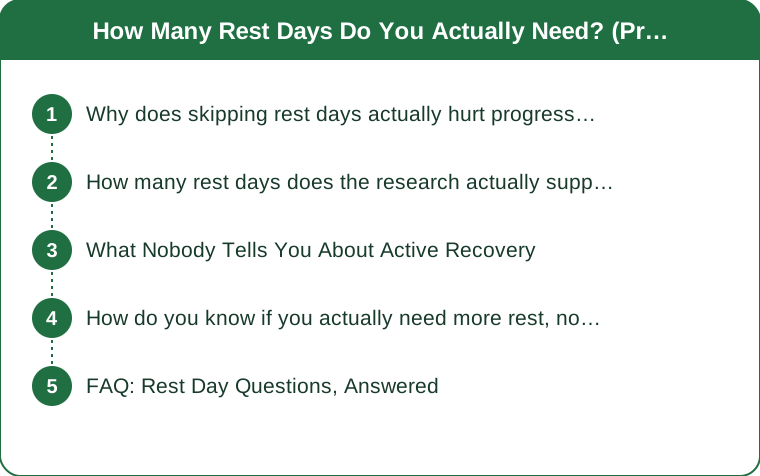
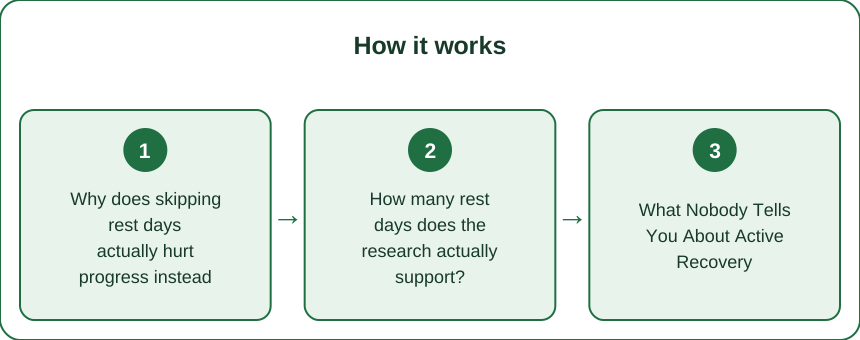
Why does skipping rest days actually hurt progress instead of helping it?
Muscle growth and strength adaptation happen during recovery, not during the workout itself — training creates a stimulus (micro-damage, fatigue), and rest is when the body actually repairs and adapts stronger. Training the same muscle groups without adequate recovery interrupts this repair process, which can blunt or reverse the intended adaptation.
This is why more training volume isn’t automatically better past a certain point — without matching recovery, added volume can produce less progress than fewer sessions with proper rest, not more.
How many rest days does the research actually support?
At least 1-2 full or active-recovery days per week for most people training with moderate-to-high intensity, with 48 hours minimum between training the same muscle group hard. This isn’t a universal number — it depends on training intensity, sleep quality, and overall life stress — but it’s a reasonable default most people undertrain relative to, not overtrain.

What Nobody Tells You About Active Recovery
A ‘rest day’ doesn’t have to mean total inactivity — active recovery (light walking, gentle yoga, easy swimming) at low intensity actually accelerates recovery in some cases by increasing blood flow to fatigued muscles without adding the training stress that would interfere with repair.
The key distinguishing factor is intensity, not movement itself: an active recovery day should feel notably easier than a training day, not just ‘a different type of hard workout.‘
How do you know if you actually need more rest, not less?
Persistently elevated resting heart rate, declining performance despite consistent training, poor sleep, and irritability or lack of motivation are common signs of inadequate recovery — the fix is more rest days, not pushing through with willpower.
If progress has stalled or reversed over several weeks despite consistent effort, adding an extra rest day (or converting a training day to active recovery) is a more effective fix than adding more training volume.
FAQ: Rest Day Questions, Answered
Will I lose fitness progress by taking rest days?
No — rest days are when the fitness gains from your training actually consolidate; skipping them undermines progress rather than protecting it.
Is it okay to do light stretching or walking on a rest day?
Yes — genuinely light activity supports recovery rather than interfering with it, as long as it doesn’t reach a training-level intensity or duration.
How do I know if I’m overtraining versus just needing motivation?
Overtraining shows up as physical signs (elevated heart rate, poor sleep, declining performance) that don’t resolve with a single good night’s sleep — motivation dips alone, without those physical markers, are a different, more mental issue.
TL;DR:
- Adaptation happens during rest, not during the workout — skipping rest can stall progress
- Most people need at least 1-2 full or active-recovery days weekly, more than they assume
- Active recovery (light walking, easy movement) supports repair without adding training stress
- Elevated resting heart rate and stalled performance signal you need more rest, not more effort
Treat your rest day as part of the training plan, not a break from it.
Keep Reading
This article is for general informational purposes only and is not medical advice. Always consult a qualified health professional for guidance specific to you.