Sleep Is the Recovery Product: Why Athletes Guard It Like Equipment
The recovery industry sells guns, boots, tubs and powders — while the intervention with the strongest evidence charges nothing and gets treated as negotiable: sleep. Elite athletes guard it like equipment because their data says it is. The copy-worthy habits, transferred.
The Repair Shift
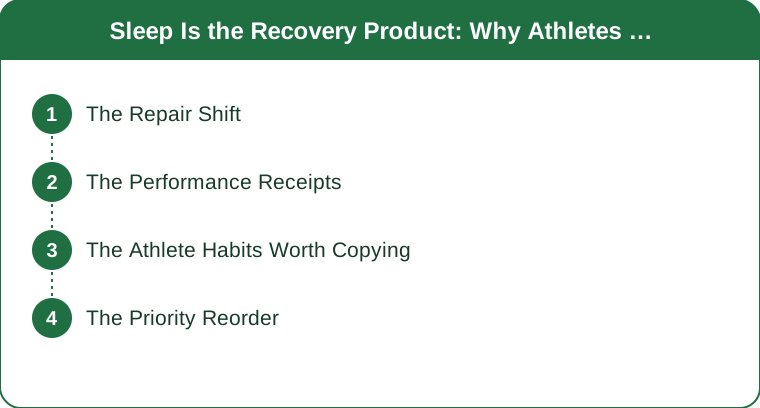
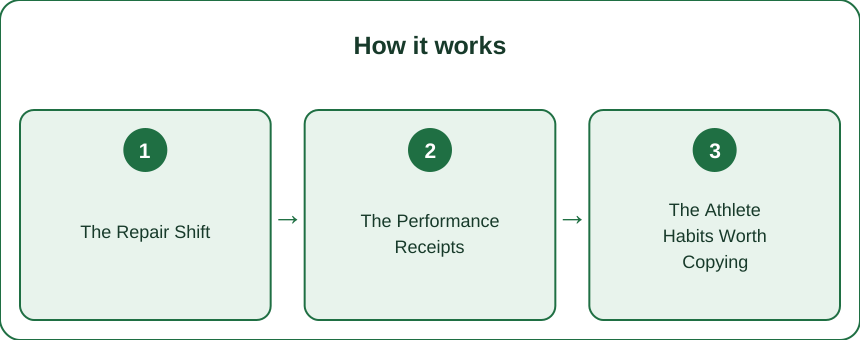
Deep sleep runs the construction: growth hormone pulses, muscle protein synthesis, nervous-system restoration (the strength-is-neural reminder), and the glycogen restock. The rest day’s entire promise executes overnight — shorting sleep shorts the very adaptation the training bought.
The Performance Receipts
The research on athletes and short sleep is blunt: reaction time, accuracy, endurance and injury rates all degrade measurably on restricted sleep — while extension studies (athletes sleeping MORE) show performance improving into the extra hours. No recovery product has receipts this strong.

The Athlete Habits Worth Copying
The transferable protocol: consistent sleep-wake anchors (the circadian rule athletes obey professionally), the wind-down hour as pre-sleep warm-up, cool-dark-quiet as equipment settings, and the nap as a tool (20-minute installments, before 3pm) rather than a character flaw.
The Priority Reorder
The honest hierarchy for recovering bodies: sleep, food, easy movement — then, distantly, the massage guns and plunge tubs. The gadgets are dessert; sleep is the meal. Guarding 7-9 hours is the most athlete-grade thing a recreational exerciser can do, and it is free every single night.
Repair runs overnight, performance tracks the hours, the habits transfer whole. The recovery aisle was always competing with a free product it couldn’t beat — the athletes just read the data first.
Keep Reading
This article is for general informational purposes only and is not medical advice. Always consult a qualified health professional for guidance specific to you.