The Difference Between a Rest Day You Actually Need and One You're Just Avoiding
Quick Answer: A genuine need for rest usually comes with physical signals — persistent muscle soreness beyond the normal 24-72 hour DOMS window, elevated resting heart rate, unusually poor sleep, or a nagging joint ache — while avoidance-driven skipping tends to show up as low motivation with no accompanying physical signal, which is the clearest practical way to tell the two apart.
Both feel similar in the moment as reluctance to work out, but they call for opposite responses.

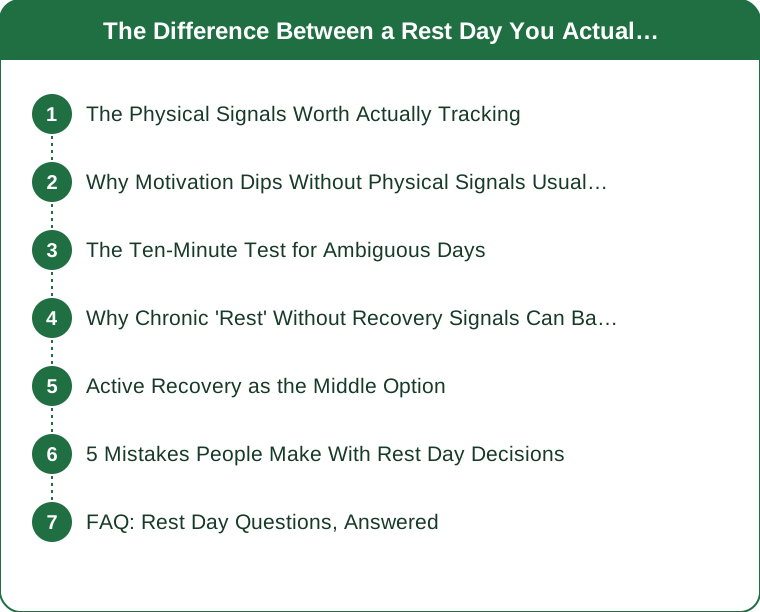
The Physical Signals Worth Actually Tracking
Resting heart rate that’s noticeably elevated compared to your normal baseline, sleep that’s been poor for several nights, muscle soreness that hasn’t improved after 3+ days, or a joint that aches specifically during a certain movement are all concrete physiological signals pointing toward genuine recovery need rather than simple reluctance. None of these require expensive tracking devices — a phone alarm to check resting heart rate before getting out of bed, or just an honest sleep-quality note, is enough data.
Why Motivation Dips Without Physical Signals Usually Mean ‘Just Start’
If none of the physical signals above are present and the resistance is purely mental — ‘I don’t feel like it today’ with no accompanying soreness, fatigue, or sleep disruption — the research-backed advice is usually to start the workout anyway at reduced intensity and reassess after 10 minutes. Motivation dips without physical cause frequently resolve once movement actually begins, which rarely happens with genuine physiological fatigue.
The Ten-Minute Test for Ambiguous Days
On days where it’s genuinely unclear which category applies, committing to just 10 minutes of light movement with permission to stop is a low-stakes way to gather more information: energy that improves during those 10 minutes points toward motivation-driven resistance, while energy that gets noticeably worse points toward a real rest need. This test avoids both extremes — neither pushing through genuine overtraining nor skipping a workout that would have gone fine.

Why Chronic ‘Rest’ Without Recovery Signals Can Backfire
Frequently skipping sessions based on motivation alone, mislabeled as ‘listening to your body,’ erodes training consistency without providing any actual recovery benefit, since the body wasn’t fatigued in the first place. This pattern also tends to compound — each skipped session makes the next one feel harder to start, creating a motivation spiral that has nothing to do with physical recovery.
Active Recovery as the Middle Option
Between a full rest day and a normal training session sits active recovery — an easy walk, gentle mobility work, light yoga — which supports genuine physical recovery (blood flow, mild movement) without adding real training stress. This is often the right call on days with mild-but-present physical signals that don’t clearly warrant complete rest but also don’t call for a full-intensity session.
5 Mistakes People Make With Rest Day Decisions
1. Treating any tiredness as automatic proof of needed rest without checking for other physical signals. 2. Skipping sessions repeatedly and calling it recovery when no actual fatigue markers are present. 3. Ignoring genuine signals (persistent soreness, poor sleep) and pushing through anyway. 4. Not having any active recovery option between full rest and full intensity. 5. Making the rest-or-train decision the night before, before the day’s actual energy and soreness levels are known.
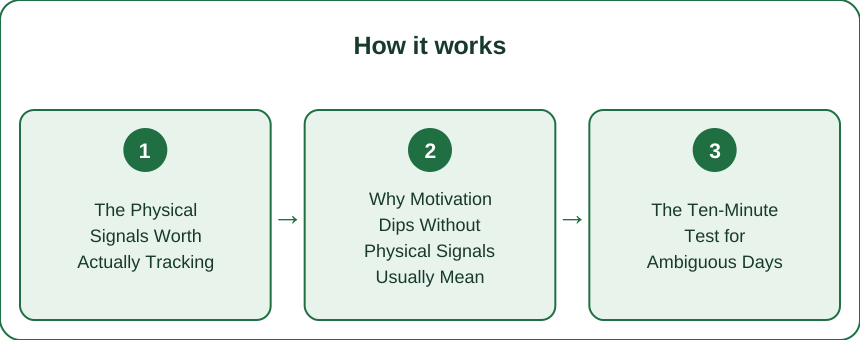
FAQ: Rest Day Questions, Answered
How many rest days does a typical person actually need per week?
Most people training moderately (3-5 sessions weekly) do well with 1-2 full rest days, though this varies by training intensity, sleep quality, and overall stress load.
Can you get too much rest and lose progress?
Yes — excessive unplanned rest can reduce training consistency and, over time, some fitness adaptations, which is part of why distinguishing genuine need from avoidance matters.
Is soreness alone always a sign you need to skip training?
Not necessarily — mild, typical DOMS-range soreness is generally fine to train through at normal or slightly reduced intensity; it’s soreness that’s severe, worsening, or joint-specific that warrants more caution.
TL;DR:
- Genuine rest need shows up with physical signals: elevated resting heart rate, poor sleep, unresolved soreness, joint pain
- Motivation dips without physical signals usually resolve once movement actually starts
- A 10-minute low-stakes test can clarify ambiguous days
- Active recovery is a useful middle option between full rest and full-intensity training
The goal isn’t to never skip a workout — it’s to make sure the skip is answering an actual physical signal, not just today’s motivation level.
Keep Reading
This article is for general informational purposes only and is not medical advice. Always consult a qualified health professional for guidance specific to you.