Why a Full Rest Day Can Sometimes Leave You More Tired Than a Training Day Did
Quick Answer: Complete inactivity can lower circulation, disrupt your normal wake-sleep rhythm, and remove the mood and energy boost that light movement provides — so a fully sedentary rest day sometimes leaves people feeling more sluggish than a day with light activity would have.
You planned a full day of doing absolutely nothing to recover, and somehow ended the day feeling heavier and more tired than after your last actual workout.

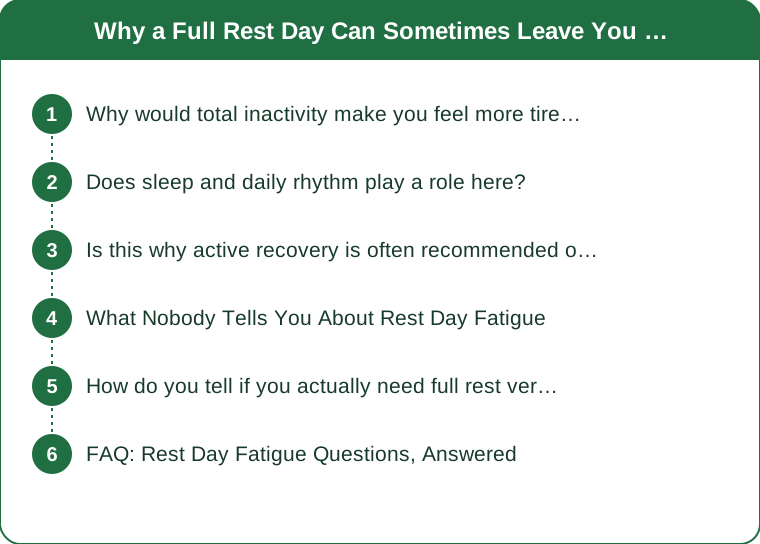
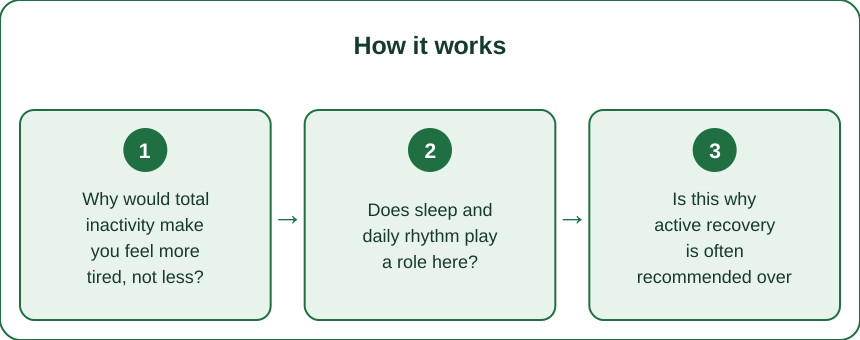
Why would total inactivity make you feel more tired, not less?
Movement itself supports circulation and lymphatic flow, which help clear metabolic byproducts from training and generally support alertness. A fully sedentary day removes that circulatory support entirely, which for some people produces a sluggish, heavy feeling rather than a refreshed one — the body isn’t necessarily doing less recovery work, but the feeling of recovery is often tied to some movement, not its total absence.
Does sleep and daily rhythm play a role here?
Yes — a day with no structured activity often disrupts normal wake and activity cues, leading to inconsistent napping, later bedtimes, or looser sleep timing that can leave you feeling more fatigued the next day than a day with your usual activity rhythm intact, even if you technically “rested more.”
Is this why active recovery is often recommended over full rest?
Largely, yes — active recovery (an easy walk, light stretching, gentle mobility work) tends to support both physical and subjective recovery better than complete inactivity for most people, most of the time. Full rest days still have a place, particularly after very high training loads or when managing injury, but they aren’t automatically the “more recovered” option for every situation.

What Nobody Tells You About Rest Day Fatigue
Mental and motivational fatigue can compound with this physical effect — a day with no plan or structure sometimes leaves more room for stress or rumination than a day with a light, low-pressure activity to anchor it, and that mental load contributes to feeling tired in a way that’s separate from physical recovery status.
Also underrated: hydration and eating patterns often shift on rest days too — some people eat and drink less without a workout as a natural cue, which independently contributes to feeling sluggish regardless of activity level.
How do you tell if you actually need full rest versus active recovery?
Persistent, deep fatigue, elevated resting heart rate, or lingering soreness point toward needing genuine full rest. A more general sense of “I don’t feel like training hard today” without those signals is often better served by light active recovery than complete inactivity.
FAQ: Rest Day Fatigue Questions, Answered
Is it bad to take a full rest day occasionally?
Not at all — occasional full rest days are appropriate, especially after high-intensity training blocks; the issue is defaulting to complete inactivity every single rest day regardless of need.
What counts as “active recovery” if I’m not sure where to start?
A 15-20 minute easy walk, gentle stretching, or light yoga all qualify — the goal is gentle movement, not another workout.
Could feeling worse on a rest day be a sign of overtraining rather than a normal pattern?
If this feeling is persistent and paired with other symptoms like poor sleep, irritability, or performance decline, it’s worth evaluating overall training load rather than assuming it’s just a normal single-day pattern.
TL;DR:
- Complete inactivity removes circulatory benefits that light movement normally provides
- A day with no activity structure can disrupt sleep and daily rhythm
- Active recovery often supports how recovered you feel better than full rest
- Persistent deep fatigue signals real rest is needed; mild reluctance often doesn’t
Keep Reading
This article is for general informational purposes only and is not medical advice. Always consult a qualified health professional for guidance specific to you.