Why a Rest Day Spent Scrolling Your Phone Can Leave You More Tired Than One Spent on an Easy Walk
Quick Answer: Passive rest like extended phone scrolling keeps the mind in a low-grade alert, reactive state without providing the light movement that supports circulation and mood, while a gentle walk provides mild physical activity plus a mental break from screens — this combination often leaves people feeling more genuinely rested by evening than a day of physically inactive but mentally stimulating scrolling.
Rest days aren’t measured by how little you physically do; they’re measured by how recovered you actually feel afterward, and those aren’t always the same thing.

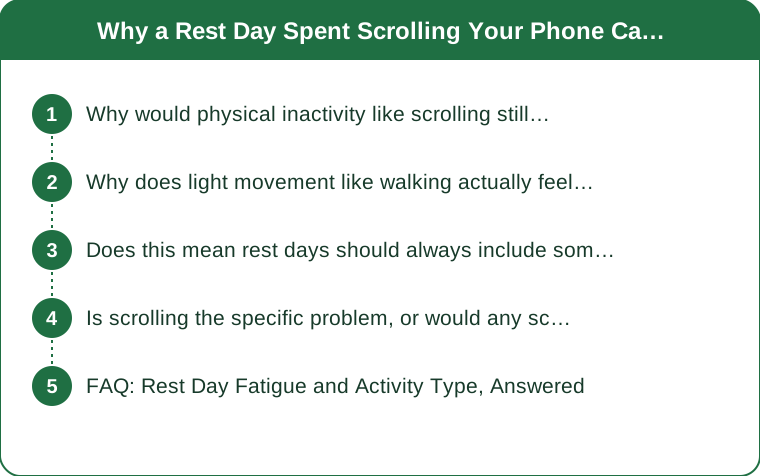
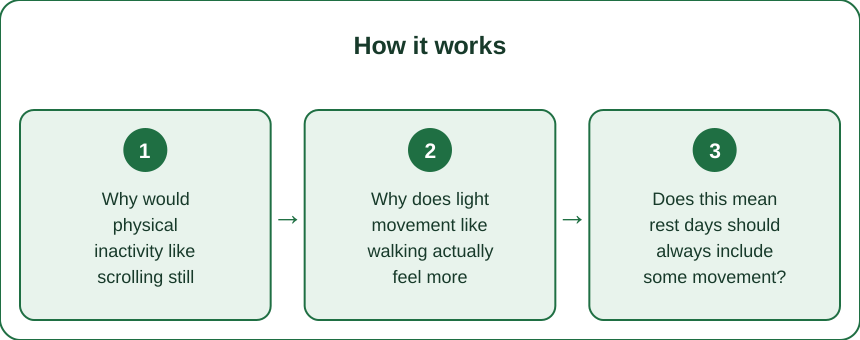
Why would physical inactivity like scrolling still feel tiring?
Extended scrolling keeps the brain processing a steady stream of novel, often emotionally charged information, which sustains mental alertness and low-grade stress response even though the body itself is barely moving, unlike genuine rest.
Why does light movement like walking actually feel more restorative than sitting still?
Gentle movement supports blood circulation and has a documented association with improved mood, and combined with a break from screen-based mental stimulation, it tends to produce a more genuine sense of recovery than physical stillness alone.

Does this mean rest days should always include some movement?
Not necessarily strenuous movement — a rest day can still be genuinely restful with a short, easy walk or light stretching rather than complete physical inactivity, since the goal is recovery from training stress, not avoiding all physical activity.
Is scrolling the specific problem, or would any screen-based activity have this effect?
The issue is less about screens specifically and more about sustained mental stimulation without physical movement — a screen-based activity that’s calm and undemanding affects this less than fast-paced, reactive scrolling through constantly changing content.
FAQ: Rest Day Fatigue and Activity Type, Answered
Does this apply the same way to true full rest days needed after intense training blocks?
The same general pattern holds, though after very intense training blocks, even light movement should stay genuinely easy rather than becoming another source of physical stress.
How long of a walk actually makes a noticeable difference on a rest day?
Even fifteen to twenty minutes of easy walking is commonly enough to provide a noticeable mood and circulation benefit without adding meaningful physical fatigue.
Is it fine to combine a walk with some phone use, like a podcast or call?
Yes — the combination of movement with calm audio content avoids the fast-paced visual stimulation that makes scrolling specifically feel less restful.
TL;DR:
- Passive scrolling keeps the mind alert and reactive without providing rest’s actual recovery benefits
- Gentle movement supports circulation and mood in a way pure physical stillness doesn’t
- Rest days can include light movement like a short walk without undermining recovery
- Fast-paced, reactive screen content affects this more than calm, undemanding activities do
Keep Reading
This article is for general informational purposes only and is not medical advice. Always consult a qualified health professional for guidance specific to you.