Why Feeling Physically Fine Isn't Reliable Proof That a Rest Day Isn't Needed
Feeling energetic and ready to train is often treated as the final word on whether a rest day is actually necessary, but perceived energy and genuine underlying recovery status are tracked by different signals in the body, and one doesn’t reliably predict the other.

Why Perceived Energy and Recovery Are Different Signals
The separation: subjective-energy-levels-are-influenced-heavily-by-sleep-caffeine-and-mood-while-actual-tissue-recovery-status-depends-on-separate-markers-like-inflammation-and-muscle-repair (subjective energy levels being influenced heavily by sleep quality, caffeine, and mood in the moment, while actual tissue recovery status depends on a separate set of markers like inflammation and ongoing muscle repair that don’t necessarily track those same inputs, per the how-many-rest-days-do-you-actually-need-guide logic — subjective-energy-levels-being-influenced-heavily-by-sleep-quality-caffeine-and-mood-in-the-moment-while-actual-tissue-recovery-status-depends-on-separate-markers-like-inflammation-and-ongoing-muscle-repair), and the reframe (two genuinely different systems being collapsed into one felt sense)).

Why That Gap Lets People Override Real Recovery Needs
The override: a-good-nights-sleep-or-a-strong-cup-of-coffee-can-make-someone-feel-ready-to-train-even-while-underlying-tissue-repair-is-still-genuinely-incomplete (a good night’s sleep or a strong cup of coffee being able to make someone feel entirely ready to train, even while underlying tissue repair from a previous hard session is still genuinely incomplete, per the signs-you-need-a-rest-day-guide logic — a-good-nights-sleep-or-a-strong-cup-of-coffee-being-able-to-make-someone-feel-entirely-ready-to-train-even-while-underlying-tissue-repair-from-a-previous-hard-session-is-still-genuinely-incomplete), and the frame (a subjective feeling being strong enough to override a real, ongoing physical need)).
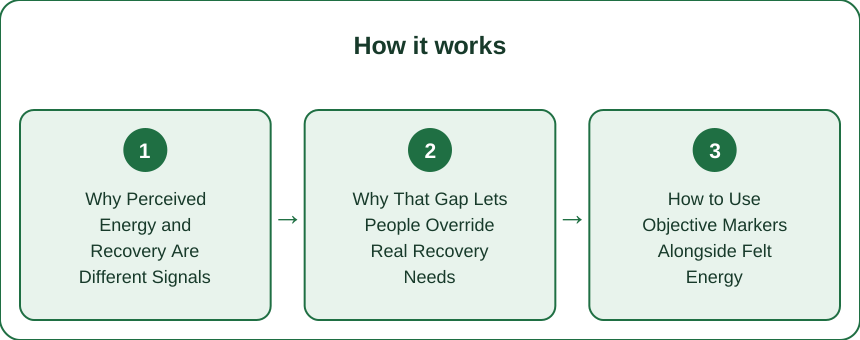
How to Use Objective Markers Alongside Felt Energy
The addition: track-resting-heart-rate-or-a-simple-soreness-scale-over-several-days-and-weigh-that-alongside-how-energetic-a-workout-feels-before-skipping-a-rest-day (tracking resting heart rate or a simple daily soreness scale over several consecutive days, and weighing that objective trend alongside how energetic a given workout actually feels, before deciding to skip a planned rest day, per the recovery-strategies-that-actually-work-guide logic — tracking-resting-heart-rate-or-a-simple-daily-soreness-scale-over-several-consecutive-days-and-weighing-that-objective-trend-alongside-how-energetic-a-workout-feels-before-skipping-a-rest-day), and the frame (combining a felt signal with an objective one instead of trusting either alone).
Subjective energy levels are influenced heavily by sleep quality, caffeine, and mood in the moment, while actual tissue recovery status depends on a separate set of markers like inflammation and ongoing muscle repair, which is how a good night’s sleep can make someone feel entirely ready to train while real recovery is still incomplete. Tracking resting heart rate or a simple soreness scale over several days, and weighing that alongside how energetic a workout feels, combines a felt signal with an objective one before a rest day gets skipped.
Keep Reading
This article is for general informational purposes only and is not medical advice. Always consult a qualified health professional for guidance specific to you.