The Rest Day, Rehabilitated: Why Recovery Is Training (and How to Do It Right)
Fitness culture has a math problem: it celebrates the workout — the stimulus — and treats the rest day as an absence, a guilty pause between the parts that count. The physiology says the opposite: training is the demolition permit; recovery is the construction — muscle is built, energy systems restocked and adaptations installed precisely when you are not training. The rest day is not the absence of progress. It is where progress physically happens. Here is the complete rehabilitation of recovery: what your body does on off days, how to rest actively, and what to do about the guilt.

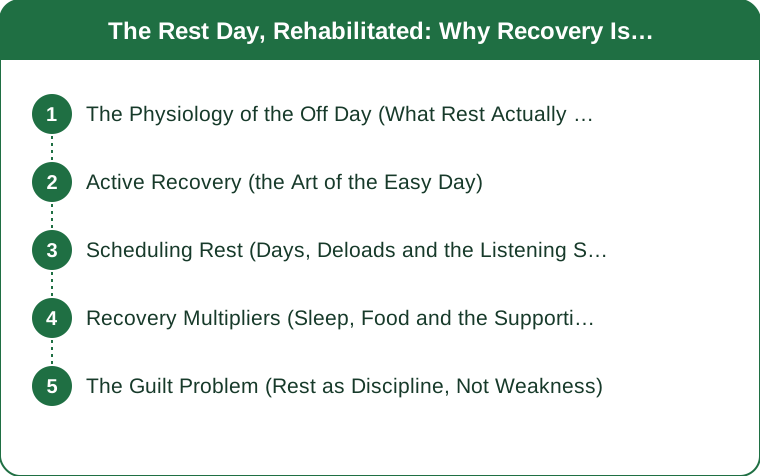
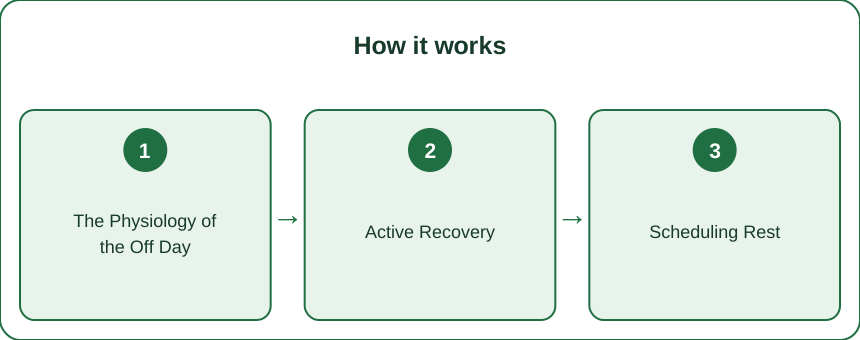
The Physiology of the Off Day (What Rest Actually Builds)
The construction schedule: hard training creates micro-damage and depletion — the stimulus — and the 24–72 hours after are when the body rebuilds slightly stronger (muscle protein synthesis runs elevated for one-to-two days post-training: the rest day is peak construction hours), restocks (glycogen refilling, the energy inventory behind next session’s quality), and recalibrates (nervous system recovery — the under-discussed component: strength is substantially neural, and a fried nervous system produces the flat, weak, everything-is-heavy sessions every lifter knows), while hormonal balance (cortisol down, repair signals up) does its quiet accounting. Skip the construction phase chronically and the math inverts: performance plateaus then dips, sleep degrades, minor injuries queue up, and motivation erodes — the overtraining cascade that reads, cruelly, like a need to train harder. More is not more. Stimulus plus recovery is more.
Active Recovery (the Art of the Easy Day)
The rest day’s best version is rarely the couch marathon: active recovery — genuinely easy movement — outperforms full stillness for soreness and stiffness (gentle circulation delivers nutrients and clears the metabolic aftermath of training; the mechanism behind the universal experience that a walk helps DOMS more than a day of sitting), with the menu: walking (the queen of recovery modalities — 20–45 unhurried minutes), easy cycling or swimming (joint-gentle circulation), yoga and stretching sessions (the mobility work that never fits on training days), and the foam-rolling-and-mobility routines that maintain the machine. The intensity ceiling is the entire skill: recovery movement should feel restorative, finish refreshing, and fail every workout definition — conversational pace, no watch-checking, effort around 3-of-10 (the classic active-recovery mistake is the easy day that competitively drifts into a medium day, which recovers nothing and trains nothing: the dead zone, again). Easy means easy. Guard it like it matters, because it is doing construction-site logistics.

Scheduling Rest (Days, Deloads and the Listening Skills)
The programming layer: weekly rest architecture (one-to-two full or active rest days weekly for most training women — spaced against the hardest sessions; the training-age footnote: beginners often need more recovery between sessions, not less, while their tissues adapt), the deload concept worth importing from strength culture (every 4–8 weeks, a deliberately lighter week — reduced weights or volume — that lets accumulated fatigue drain and precedes the best training weeks of most lifters’ logs; plateaus often break after deloads, not after heroics), and the body’s own dashboard for unscheduled rest: resting heart rate elevated for days, sleep quality dropping despite fatigue, everything-feels-heavy sessions stacking, persistent joint niggles, and the motivation flatline (distinguishing tired-but-energized-by-training from depleted-by-it — the honest question that answers most should-I-train-today debates). Rules of thumb: soreness that alters your walking gait gets another day; illness below the neck rests, sniffles above can move gently; and two forced-feeling sessions in a row is the body requesting the deload early. The schedule serves adaptation. Adaptation keeps its own calendar.
Recovery Multipliers (Sleep, Food and the Supporting Cast)
Where recovery is actually won: sleep is the non-negotiable headline (growth hormone’s overnight repair shift, the muscle-protein and nervous-system restoration — chronic short sleep measurably impairs strength gains, recovery speed and body composition: the 7–9 hours are training infrastructure, not lifestyle preference), protein across the week (the construction material — the rest day is not a low-protein day; muscle builds on off days and wants its palm-sized servings on schedule), overall food adequacy (chronic under-eating plus hard training is the recovery-killer combination behind much unexplained fatigue in active women), hydration doing its unglamorous work, and the supporting cast ranked honestly: massage and foam rolling (real subjective benefits, modest measured ones — worthwhile), sauna and contrast showers (promising, pleasant), compression (real for soreness), and the ice-bath caveat (post-strength-training cold plunges may blunt some muscle-building signal — separate them from hypertrophy work by hours, per the recovery literature). The pattern: the free fundamentals (sleep, food, easy movement) do 90% of recovery; the recovery-industrial complex sells the last 10% at 90% of the price.
The Guilt Problem (Rest as Discipline, Not Weakness)
The psychological rehabilitation: rest-day guilt is near-universal among committed exercisers and rests on a false ledger (the day counts as zero — when physiologically it is the deposit clearing; reframe installed: skipping rest is skipping gains, and the athlete’s version — elite training is famously built around recovery, with the best in every sport guarding rest like a competitive advantage, because it is one), the identity upgrade that resolves it (from someone who works out daily to someone who trains intelligently — the second identity survives decades, injuries and life seasons; the first one breaks), the practical guilt-management toolkit (schedule rest days in advance like sessions — chosen rest feels different than collapsed rest; give them content — the recovery walk, the yoga video, the foam-roll-and-stretch ritual make rest active and legible; and track performance across weeks, letting the post-rest session quality testify), and the red-flag honesty: inability to rest without significant anxiety, or training through pain and illness compulsively, deserves the same self-compassion and possibly professional support as any other rigid pattern. Strong is built in cycles. The women still training joyfully at seventy were never the ones who refused to rest at thirty-five. They were the ones who learned this paragraph early — and took the walk.
Rest days, rehabilitated: recovery is when fitness is physically constructed (muscle synthesis, glycogen, nervous system — all off-day work), active rest at a guarded 3-of-10 beats both the couch and the sneaky medium day, deloads precede breakthroughs, sleep and protein are the real recovery products, and the guilt resolves under the athlete’s ledger: rest is a deposit, not a zero. Schedule this week’s rest day tonight — content included, walk suggested, guilt declined. The construction crew works while you don’t.
Keep Reading
This article is for general informational purposes only and is not medical advice. Always consult a qualified health professional for guidance specific to you.