Rest-Day Guilt: Why Skipping Rest Sabotages You and How to Actually Take a Day Off
Rest-day guilt is fitness culture’s quietest injury — the day off spent anxious, the recovery poisoned by the feeling of falling behind — and it sabotages the very adaptation rest exists to deliver. The rest-guilt guide: the psychology, the physiology and the day designed well.

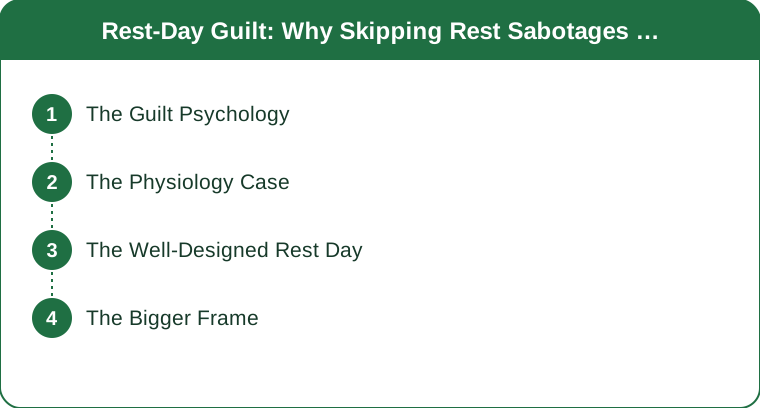
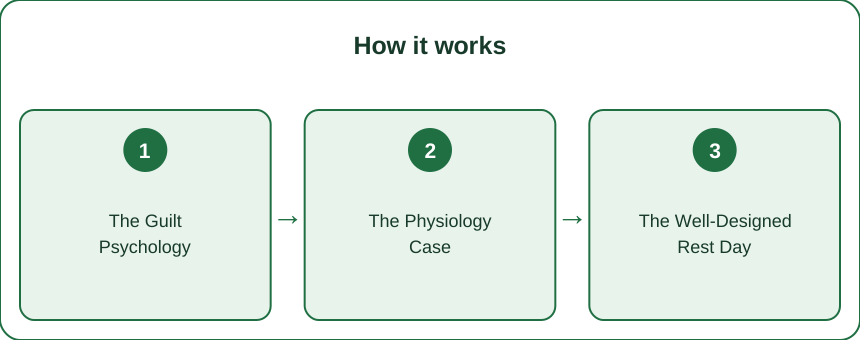
The Guilt Psychology
Where the anxiety comes from: the more-is-better conditioning (the fitness culture equating volume with virtue — the no-days-off content from the myths doctrine; the rest framed as weakness by an industry selling intensity), the progress-anxiety mechanism (the day off feeling like moving backward — the loss-aversion from the deload doctrine; the fitness that doesn’t evaporate in 24 hours per the detraining doctrine), the identity entanglement (the self-worth attached to training streaks — the exerciser who IS her workout having nothing left on rest days per the identity doctrine), the compensation behaviors (the rest-day food restriction, the guilt-driven extra steps, the ‘active recovery’ that’s secretly a workout — the rest that isn’t; the patterns worth naming honestly), and the red-flag honesty (the rest that triggers genuine distress — the exercise-compulsion territory deserving professional support per the mental-health doctrine; the healthy discipline versus the anxious rigidity distinction).
The Physiology Case
Why rest IS the training: the adaptation timing (the fitness built BETWEEN sessions — the supercompensation from the deload doctrine; the muscle repaired, glycogen restocked and nervous system reset on the off day; the rest day being when the workout gets cashed), the stress-budget accounting (the training stress needing recovery resources — the rest day as the ledger’s balancing entry per the stress doctrine), the performance evidence (the rested sessions outperforming the fatigued grind — the quality-over-frequency math; the athlete who rests hitting harder Tuesdays), the injury mathematics (the rest days as the overuse-injury firewall — the tissue-repair windows from the tendon doctrine; the skipped rest compounding into forced rest), the hormonal reality (the chronic no-rest training elevating stress hormones — the cortisol picture from the overtraining doctrine; the rest as hormone hygiene), and the reframe summary (the rest day retitled: the ADAPTATION day — the vocabulary that ends the guilt at its source per the reframe doctrine).

The Well-Designed Rest Day
Resting without climbing walls: the gentle-movement clause (the walk, the easy stretch, the leisurely bike ride counting as REST — the active-recovery tier from the restday doctrine; the line drawn at effort: the movement that refreshes versus the workout in disguise), the restless-mind occupations (the rest day given a SHAPE — the meal-prep session, the hobby hours, the social plans; the day that has contents doesn’t itch per the deload doctrine), the recovery-practices menu (the extra sleep claimed, the bath, the massage-and-rolling tier from the recovery doctrine — the rest day as active self-maintenance, which satisfies the do-something itch honestly), the ritual framing (the rest day scheduled and NAMED in the program — the planned day carrying no guilt because it’s ON the plan per the pre-commitment doctrine; the coach’s-orders psychology self-administered), the phone-and-comparison hygiene (the fitness-content scroll on rest days feeding the guilt — the feed curated per the comparison doctrine; the rest day offline from fitness culture), and the practice honesty (the guilt fading with repetition — the first deliberate rest days feeling wrong and the tenth feeling wise; the skill built like any other per the practice doctrine).
The Bigger Frame
Rest as identity upgrade: the athlete-model evidence (the elites resting seriously — the professional recovery from the masters doctrine; the rest being what the best do most deliberately), the long-game arithmetic (the career of consistent training WITH rest beating the intense year that ends in burnout — the decades math from the longevity doctrine), the life-dividend note (the rest day funding the rest of life — the relationships, hobbies and errands that all-training schedules starve; the whole-person health from the balance doctrine), the self-trust building (the rest taken teaching the body-mind system it can be trusted — the anxiety that shrinks when rest keeps proving safe), and the closing permission (the rest day as a training decision made from strength — the day off taken like the athlete you are; the guilt replaced by the quiet confidence of someone playing the long game; the adaptation, collected on the couch). Schedule it, name it, fill it gently: the rest, taken without apology.
Rest-day guilt sabotages the adaptation rest exists to deliver — fitness is built BETWEEN sessions. Rename it the adaptation day, put it ON the plan, fill it with gentle shape (walk, prep, hobby, extra sleep), and skip the fitness-content scroll. Distress at resting deserves real support.
Keep Reading
This article is for general informational purposes only and is not medical advice. Always consult a qualified health professional for guidance specific to you.