Recovery Strategies That Actually Work (Rest Smarter, Train Better)
Recovery is where your training actually pays off — your body adapts and gets stronger during rest, not during the workout. But not all recovery strategies are equal. Here is why recovery is part of training, the strategies that genuinely help, and how to rest without guilt.

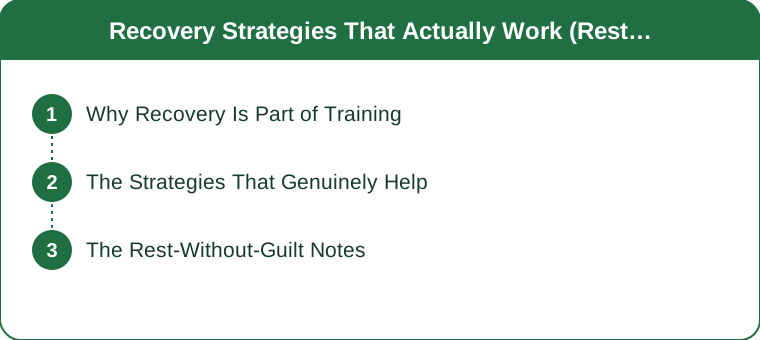
Why Recovery Is Part of Training
Adaptation happens at rest: the the-you-adapt-during-recovery (the your body adapting and getting stronger during recovery, not the workout from the rest-day logic — the grow-in-recovery), the the-recovery-prevents-burnout-and-injury (the recovery preventing the overtraining, burnout and injury of too much from the signs-you-need-rest logic — the recover-to-avoid-injury), the the-better-performance (the recovered training beating grinding through fatigue from the rest-day logic — the fresher-is-better), the the-more-is-not-always-better (the more training without recovery going backward from the rest-day logic — the the-overtraining-trap), the the-recovery-is-productive (the recovery being a productive part of training, not laziness from the rest-day-guilt logic — the recovery-is-productive), and the reframe (the recovery as an essential part of training where adaptation happens — resting smarter to train better, not being lazy).

The Strategies That Genuinely Help
Effective recovery: the the-sleep (the sleep being the single most powerful recovery tool from the sleep-athlete logic — the sleep-first), the the-rest-days (the scheduled rest days for the body to recover from the rest-day logic — the take-rest-days), the the-active-recovery (the gentle active recovery — walking, light movement — on rest days from the active-recovery-walk logic — the active-recovery), the the-nutrition-and-protein (the good nutrition and enough protein to recover from the rest-day-nutrition logic — the fuel-recovery), the the-hydration (the hydration supporting recovery from the rest-day-nutrition logic — the hydrate), the the-manage-training-load (the balancing training and recovery, not maxing out every day from the rest-day logic — the manage-the-load), the the-listen-to-your-body (the reading the signs you need more rest from the signs-you-need-rest logic — the the-signals), and the the-active-vs-passive-rest (the choosing active or passive rest as needed from the active-vs-passive logic — the active-or-passive).
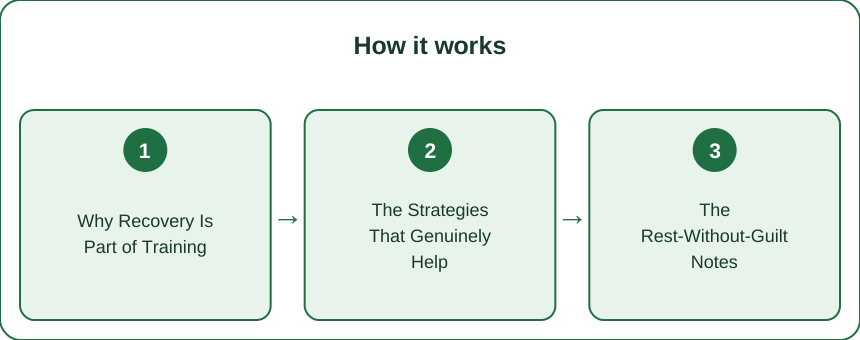
The Rest-Without-Guilt Notes
Resting guilt-free: the the-recovery-is-not-laziness (the reframing recovery as productive, not lazy from the rest-day-guilt logic — the recovery-not-laziness), the the-rest-days-make-you-better (the rest days making you stronger, not weaker from the rest-day logic — the rest-makes-you-better), the the-listen-to-the-signs (the honoring the signs your body needs rest from the signs-you-need-rest logic — the honor-the-signs), the the-schedule-recovery (the scheduling recovery as part of your plan from the rest-day logic — the plan-recovery), the the-quality-recovery (the making recovery days genuinely restorative from the active-recovery-walk logic — the restorative-rest), the the-let-go-of-the-guilt (the letting go of the guilt that undermines recovery from the rest-day-guilt logic — the drop-the-guilt), the the-consistency-includes-rest (the sustainable training including rest from the rest-day logic — the rest-is-part-of-it), and the frame (the recovery as sleep, rest days, active recovery and good nutrition treated as a productive part of training — resting smarter to train better, without guilt. Prioritize sleep, take rest days and active recovery, fuel and hydrate, listen to your body, and let go of rest-day guilt).
Recovery is where your training actually pays off — your body adapts and gets stronger during rest, not during the workout — but not all recovery strategies are equal. Recovery is part of training because you adapt during rest, it prevents overtraining and injury, recovered training beats grinding through fatigue, more is not always better, and recovery is productive not lazy. The strategies that genuinely help: sleep (the most powerful tool), scheduled rest days, gentle active recovery, good nutrition and protein, hydration, managing training load, listening to your body, and choosing active or passive rest as needed. Rest without guilt by reframing recovery as productive, knowing rest days make you better, honoring the signs you need rest, scheduling recovery, making rest days restorative, letting go of guilt, and treating rest as part of sustainable training. Rest smarter, train better.
Keep Reading
This article is for general informational purposes only and is not medical advice. Always consult a qualified health professional for guidance specific to you.