The Signs You Need a Rest Day (and Why Taking It Makes You Fitter)
Rest days aren’t the opposite of progress — they’re part of it, the time when your body actually adapts and gets stronger. But knowing WHEN you need one takes reading your body. The guide: why rest is productive, the signs you need a rest day and how to take it without the guilt.

The Rest-Is-Productive Case
Why rest makes you fitter: the the-rest-is-part-of-progress (the rest-days being part-of-progress, not-opposite from the rest-day-guide chapter — the the-part-of-progress; the the-not-the-opposite; the the-productive-rest), the the-adaptation-happens-in-rest (the the-body-adapting-and-strengthening in-rest — the the-adaptation; the the-gains-in-rest; the the-recovery-builds), the the-prevents-overtraining (the rest preventing overtraining-and-injury from the overtraining logic — the the-prevents-overtraining; the the-injury-prevention), the the-sleep-and-recovery (the sleep as a recovery-tool from the sleep-athlete-recovery chapter — the the-sleep; the the-recovery-tool), the the-more-isnt-always-better (the more-training not-always-better — the the-more-isnt-better; the the-recovery-matters), and the reframe (the rest-day as productive, fitness-building recovery — the rest-to-progress; the the-rest-makes-you-fitter).

The Signs-to-Watch Breakdown
The signs you need a rest day: the the-persistent-fatigue (the persistent, unusual-fatigue from the overtraining logic — the the-fatigue; the the-tired; the the-key-sign), the the-declining-performance (the declining-performance/strength — the the-performance-drop; the the-weaker; the the-going-backward), the the-persistent-soreness (the persistent, not-easing soreness from the doms logic — the the-soreness; the the-not-recovering), the the-mood-and-motivation-dip (the mood-and-motivation dropping — the the-mood; the the-motivation; the the-dread-the-workout), the the-poor-sleep (the disrupted-sleep — the the-sleep; the the-poor-sleep-sign), the the-elevated-resting-heart-rate (the elevated resting-heart-rate — the the-resting-hr; the the-elevated; the the-recovery-marker), the the-nagging-niggles (the nagging aches-and-niggles — the the-niggles; the the-aches; the the-injury-warning), and the the-just-run-down (the feeling-run-down-and-depleted — the the-run-down; the the-depleted; the the-listen).
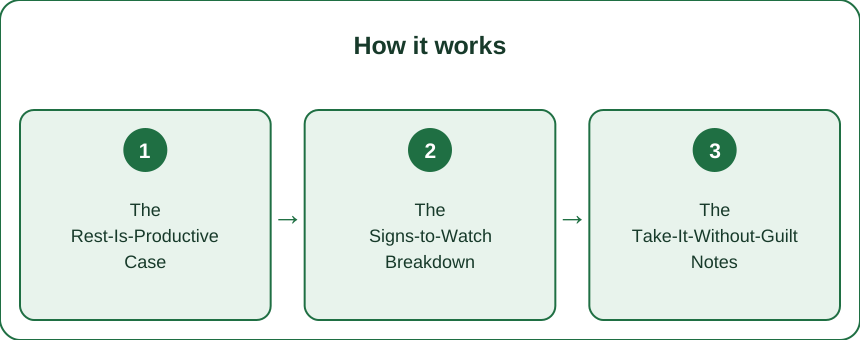
The Take-It-Without-Guilt Notes
Taking the rest without guilt: the the-rest-day-guilt-is-common (the rest-day-guilt being common from the rest-day-guilt chapter — the the-guilt; the the-common; the the-let-it-go), the the-rest-is-not-lazy (the rest not-lazy, it’s-productive — the the-not-lazy; the the-productive; the the-reframe), the the-active-recovery-option (the active-recovery (gentle-walk) from the active-recovery-walk chapter — the the-active-recovery; the the-gentle-movement; the the-optional), the the-rest-day-nutrition (the rest-day nutrition (still-fuel-recovery) from the rest-day-nutrition chapter — the the-nutrition; the the-fuel-recovery), the the-sleep-and-recover (the prioritize-sleep-and-recovery from the sleep-athlete-recovery chapter — the the-sleep; the the-recover), the the-listen-to-your-body (the listen-and-take-it-when-needed — the the-listen; the the-responsive), the the-schedule-rest-proactively (the schedule-rest-days proactively — the the-schedule; the the-proactive-rest), and the frame (rest-day signs through the rest-is-productive-case, the signs-to-watch and take-it-without-guilt — the fatigue, performance-drop and mood-dip signs heeded and rest-taken-without-guilt because rest-makes-you-fitter; the rest-day, taken). Rest days aren’t the opposite of progress — they’re part of it, the time your body adapts and gets stronger. Watch for the signs you need one: persistent unusual fatigue, declining performance, soreness that won’t ease, dropping mood-and-motivation, poor sleep, elevated resting heart rate, and nagging niggles. Take it without guilt (rest is productive, not lazy) — use active recovery or gentle movement if you like, fuel recovery, prioritize sleep, and schedule rest proactively: the rest day, taken because it makes you fitter.
Rest days aren’t the opposite of progress — they’re part of it, the time your body actually adapts and gets stronger. Watch for the signs you need one: persistent unusual fatigue, declining performance or strength, soreness that won’t ease, dropping mood-and-motivation, poor sleep, elevated resting heart rate, and nagging niggles. Take it without guilt — rest is productive, not lazy. Use active recovery or a gentle walk if you like, still fuel your recovery, prioritize sleep, and schedule rest proactively rather than only when forced. Taking it makes you fitter.
Keep Reading
This article is for general informational purposes only and is not medical advice. Always consult a qualified health professional for guidance specific to you.